Showing posts with label potato. Show all posts

Friday, August 14, 2026

Swiss Chard Hash

Welcome back! It's certainly been a while. Many changes have been afoot in our family, with the birth of our second child and a move to a new house. I had a few posts planned for last fall, but the news of gestational diabetes hit us like a truck and I immediately had to adjust to the new culinary challenge. While such limitations can encourage creativity, calculating carbs down to the gram and weighing everything we ate was not fun. One thing that did come out of it was exploring how to use millet and sweet potatoes, which perhaps will appear on the blog at some point. Luckily, that's behind us now. This post has nothing to do with any of that, and in fact is a celebration of carbs.


I have actually been making various hashes all the way back to college when I first started cooking for myself, but for some reason I've never written a recipe. The formula is simple: boil potatoes and fry them with onions and whatever else you want. This particular one uses Swiss chard to get some vegetables on the table alongside the potatoes. I served with baby back ribs made in the convection oven. Typically, I try to come up with meal ideas where one component can be cooked mostly hands-free in the oven while I focus on whatever is cooking on the stove. 

This dish turned out really well and can be a pattern for other variations. You could easily swap in kale or beet greens for the Swiss chard, though keep in mind that kale stems are tougher and need to cook longer. Bacon or ham could push this in the one-pan meal direction as well.

Tuesday, July 15, 2025

Gratin Dauphinois

Bonne fête! After missing last year, it's great to be back for another Bastille Day post. Gratin Dauphinois is a rather simple dish compared to what we often think of with French cuisine, but it's no less delicious for it. The best part is perhaps how easy it is to make. This particular recipe is adapted from one I found in Jacques Pépin's Essential Pépin, scaled down slightly to the amount of potatoes I had on hand. The dish gets its name from the Dauphiné region of southeastern France, where it originates. This is a part of France I know very little about. Some quick research tells me it was the site of the Day of the Tiles, a series of riots in Grenoble (the capital of Dauphiné), considered by some to be the start of the French Revolution. 

Grain Dauphinois reminds me quite a bit of scalloped potatoes, which I posted thirteen years ago and have not made again since. The main difference is the strong garlic flavor here - grating the garlic on a microplane really brings it out. As far as the potatoes themselves go, I did not peel them, but that's certainly an option. Pépin points out that it is important not to otherwise scrub or rinse the cut potatoes because the starch from the potatoes themselves is what thickens the liquid. There is no flour or any other thickener in the dish. There is some debate over the use of cheese. My cursory research points out that traditionally, it is not included, but that many recipes do use it, such as Escoffier himself. Gruyère is probably best, though I used a Sweet Swiss from Fair Oaks Farms that I picked up on our last drive through Indiana. This was also a good excuse to use the nice copper gratin pan seen the the photo, but any small casserole dish will do the job.

Sunday, February 26, 2023

Taco Potatoes

Today's post is less of full recipe and more of an adaptable idea. Baked potatoes topped with various meats at Big Daddy's BBQ were one of Ariel's favorite meals in Tulsa, and I can't disagree with the concept. It's a great self-contained meal with endless variations. With how busy things have gotten lately, I'm appreciative of simple but tasty dinners. 

For the meat topping, I went with my own ground beef taco meat recipe from 2016. I can report that it's still good, though I increased the paprika a bit. Other good choices would be my Instant Pot pulled pork or the shredded chicken I use for nachos. All these recipes are linked below. Since the pork and chicken freeze very well, using those would make putting this together a snap if you have them on hand. For the toppings, I used the green parts of a napa cabbage. The basic baked potato is derived from Alton Brown's simple instructions.

Sunday, August 21, 2022

Upgrade: Portuguese Chicken (葡國雞)

Portuguese chicken (translating literally to pou gwok gai in Cantonese, pu guo ji in Mandarin, and galinha à portuguesa in Portuguese) is a dish that fascinates me endlessly. It's a fusion of east and west that could only have been born in its own specific context. Back when I wrote about it in 2012, I noted that little was written about it (at least in English) on the internet. There's quite a bit more now, but it's still not a widely known dish. It also doesn't show up in any of my Chinese cookbooks. I still don't know if my version is authentic, but I can tell you it tastes good and improves upon my previous one in many ways. One of those can be seen in the photo, where the deeply colored sauce appeals a lot more than the bright yellow of my previous attempt.

Despite the name, Portuguese chicken does not originate in Portugal, but rather the bustling southern Chinese city of Macau, which was an outpost of the Portuguese empire for over 450 years. The food of Macau blends Cantonese cuisine with influences brought from around the world by Portuguese traders. As such, Portuguese chicken features some ingredients not commonly seen in other Chinese dishes. Most recipes feature five main components: chicken, potatoes, onion, coconut milk, and turmeric but diverge from there. Other possible additions include sausage, olives, and bell peppers. Some are simmered on the stovetop, while others are baked as a casserole. In some versions, the casserole includes rice on the bottom or desiccated coconut sprinkled on top. I decided to keep it simple and stay on the stove in a wok. This also makes it easy to thicken and adjust the sauce at the end.

After I wrote my original post, I found out I was not the only member of my family to be a fan of Portuguese chicken. As it turns out, my grandma went to school in Macau for a time and enjoyed it regularly. She informed me back then that my version was incorrect because the chicken and potatoes should be cut into smaller pieces. Cutting smaller does make more sense to eat with chopsticks and also helps everything cook more quickly. Another change I made was to crank up the seasoning and build a more complex flavor in the sauce. I also chose to marinate the chicken this time. Sources vary greatly on what should go in the marinade, but I went with a classic Chinese style. I included just a little dark soy sauce for color - don't overdo it. Some recipes use more spices in the marinade, while I put the into the sauce instead. I did not have any Portuguese chouriço (in fact, I have no idea where one can buy such a thing) but did have some Spanish chorizo on hand that worked well here. Some Cantonese lap cheong would also probably do just fine. The versions I recall from Shanghai did not include any sausage, and that works as well.

Wednesday, August 5, 2020

The Breakfast Klub

The best part about making klub is eating the leftovers the next day. The soft, pillow-like dumplings firm up in the refrigerator, making them easy to slice. They can then be fried crispy, and are absolutely delicious. When I was a kid, we always looked forward to breakfast klub. Although we had them for lunch this time, they are equally great.


As part of my usual strategy of "using every part of the buffalo," I fried the klub slices in the rendered bacon fat I saved from the bacon cooked with the initial meal the day before. Any kind of fat, such as lard, bacon, or vegetable oil could be used. There's not much else to say other than to give this simple comfort food a try!

Tuesday, August 4, 2020

Klub

My grandmother, Irene Storey, was well-known in our family and her community for making a variety of Midwestern treats, including caramel rolls, buns, and lots of different cookies and bars. I've written about a few of her dishes before (red hotdish and party salad), but the most iconic one by far is klub. We only saw them a few times a year, when she visited, and they were always greatly anticipated. Klub is a Norwegian word, which we always pronounced something like "kroob." An article I found suggests this pronunciation is from a regional dialect of Norwegian. Klub are potato dumplings, and are cousins of the various Central European knödel including the famous matzo balls. Perhaps it's no wonder Ariel has quickly become a fan.


As with a lot of traditional foods, there is great variety in how people make klub. The basic formula involves potato, some kind of flour, and some kind of pork. Many recipes involve graham flour or incorporating the pork into the dumplings, such as with a small cube inside. My family's recipe is comparatively simple. The dumplings use only all-purpose flour, and the pork is served on the side. We always had side pork, which as I understand it is essentially unsmoked bacon. I used thick-cut bacon instead. I'm told the potatoes are traditionally processed through a meat grinder, but a food processor is much easier.

Research for this post involved diving into old community cookbooks, including the First Lutheran and Polaris cookbooks from Roseau, Minnesota. This particular recipe is adapted from the 50th Anniversary Polaris cookbook, credited only to "Janet Hetteen's Mom," who a quick Google revealed was Arlene Mekash of Roseau. Her recipe is very close to what I remember eating as a kid. I made a few changes to suit my own style. The original recipe calls for 4 cups of grated potato. I prefer to give this in pounds so that you don't have to guess how many potatoes makes a certain volume. 3 pounds made a little more than 4 cups. We ended up using quite a bit more flour than the original, but this should be done by feel. Once the dumplings can be formed, stop adding flour.

If I were to give one piece of advice when making klub, it is to make more than you intend to eat. The leftovers are even better, so stay tuned for a quick post on that tomorrow.

Wednesday, July 29, 2020

Spicy Potatoes

Over time, I've blogged most of the dishes in regular rotation in our household, including such favorites as adobo chicken, roasted mushrooms, and grilled cutlets. Roasted potatoes have been a core part of my repertoire almost since I started cooking, which was reflected in a very early post. Several years ago, I started adding paprika to them. This version, which Ariel dubbed "spicy potatoes," quickly became a staple. I even made small jars of the spice mix (along with my rib rub) to give to guests at our wedding. 


For years, I've made these potatoes by mixing all the ingredients together and throwing them in the oven. If you're in a rush, that works perfectly fine. Recently, though, I've been experimenting with parboiling them first. This idea was inspired by Kenji's recipe, as well as a video by Adam Ragusea. Although this takes a lot longer, the result is a soft interior with a crispy crust. We usually serve them with a mix of Kewpie mayo and ketchup. Although we call them "spicy potatoes," they aren't actually spicy in the sense of heat, just that they use spices. Try a little cayenne pepper, or some sriracha mixed into the sauce, if you like.

Roasted potatoes are a versatile side dish with a great result-to-effort ratio. With the long shelf life of potatoes, they are also excellent pandemic cuisine. We enjoyed these as part of our anniversary dinner, along with steak au poivre. Steak frites is a classic for a reason, and these potatoes can easily substitute for fries while be much easier and less messy to make.

Thursday, May 14, 2015

Atakilt Wat (Ethiopian Vegetable Stew)

Today, No Free Lunch is proud to celebrate its 100th post! Due to end of semester madness, it's been more than a month since my last post, but I'm hoping to pick up the pace again soon. I'm also dipping my foot into Twitter, and I am posting all blog updates there, as well. You can follow me there @SebastianWai.

Looking back at the past 99 posts, there are many I am very proud of, and others that clearly need work. My all-time most popular has been my recipe for Galinha à Portuguesa, which is actually on the first page of Google hits for that dish. The second most popular, the recipe for "tongue depressors," is actually one I may have to revisit, as I have vastly improved the dish over the last three years with my increased knowledge of Chinese ingredients and techniques. Perhaps this means I've carved out a tiny internet niche in obscure Chinese dishes. In any case, I'm looking forward to another 100 chances to share some fun and unique recipes. Today is no exception, featuring my first African dish on the blog.


One evening a few months ago, I was trying digging through the fridge, trying to figure out what to make for dinner. I found I had about half a head of cabbage and some carrots, so I did a Google search for "cabbage and carrots" and came across what I now know to be called "atakilt wat," an Ethiopian stew. This dish is easy to make, and it consists completely of ingredients I generally have on hand. In many of the recipes I've shown recently, the moisture retained in cabbage is a problem that we address by salting it ahead of time; this time, though, the water in the cabbage is the basis for the stew. The result is a gentle and aromatic dish that is great on its own or as an accompaniment.

Ingredients
  • 1 onion, diced
  • 2 Tbs minced ginger
  • 4 cloves minced garlic (about 2 Tbs)
  • 1 lb red potatoes (about 5 small ones)
  • 3/4 lb carrots, peeled
  • 1 1/2 Tbs ground turmeric
  • 1/2 cup water
  • 1 1/2 lb green cabbage, roughly chopped
  • Salt and pepper to taste
  • Olive oil

Instructions

It is a good idea to prepare the vegetables ahead of time, as there is a lot of chopping. I cut the carrots into pieces about 1 1/2 to 2 inches long, then halved or quartered them according the thickness. I cut each potato into 8 pieces, but you may want to do more with bigger potatoes (to get an idea of size, my potatoes were 5 to a pound).

Onion, garlic, and ginger cooking

Heat olive oil on medium-high in a dutch oven or large pot with a lid. Cook the onion for a few minutes, until starting to soften and brown. Add ginger and garlic and cook another minute, stirring frequently. Add the potatoes, carrots, turmeric, and water. Stir together and cover. Cook for a few more minutes. 

Note the difference in liquid from the lead photo

Next, turn the heat down to low and add the cabbage, one handful at a time. Stir in each batch until slightly wilted, then add more. Once all the cabbage is in, cover and cook for about 45 minutes. Stir every 10 minutes. Once done, the potatoes and carrots will be completely soft and the cabbage will have sweated out. As always, taste and adjust seasoning. I added both salt and pepper. The stew can be served on its own, with rice, or (if you have it) Ethiopian bread.

Wednesday, October 1, 2014

Japanese Potato Salad

Potato salad has never been a food that got me excited, and I don't think I'm alone in that. The average grocery store potato salad is just not all that good. This was before I discovered Japanese potato salad. We are lucky enough to have a Japanese restaurant a few minutes from our house that serves bento boxes all day, and potato salad is an ever-present component. It also occurs to me this is the first time I've posted about a Japanese dish, and this popular item is a great place to start. The crunchy cucumbers and colorful carrots provide a great contrast to the potato base, and it works well as a side to any dish.


The unusual ingredient here is Japanese mayonnaise. From what I've heard, mayo is a highly popular condiment in Japan, where they put it on everything, including pizza. Kewpie is the brand you will likely encounter. For more information about exotic ingredients, I have created a new page with an ever-growing list of ingredients used or mentioned on the blog, discussing usage and where to buy them.

Ingredients
  • 2 lb potatoes (gold or red)
  • 2 large carrots
  • 3 hard-boiled eggs
  • 1/2 large cucumber (approx), thinly sliced
  • 1/2 medium onion, finely diced
  • 1 Tbs rice vinegar
  • 1/2 cup Japanese mayonnaise
  • Salt and pepper to taste

Instructions

Get some water boiling in a pot. While the water heats up, peel the potatoes and carrots. Quarter the potatoes and cut the carrots into similar-sized pieces. Cook until soft and can be pierced easily with a fork. Use a potato masher to partially mash the potatoes. You want to leave some chunkiness to it. Cut up the carrots into coins or half coins for the bigger end. Set these aside to cool.

If you have not previously boiled the eggs, you can toss them in the water now, turn the heat down to low, and they will be done in 10-12 minutes. Transfer eggs to a cold water bath. Once they have cooled off, peel and dice.

To prepare the cucumber, slice as thinly as you can. I used this as an opportunity to try out our new mandoline from IKEA, but a sharp knife will also do the job. Put the slices into a bowl, salt thoroughly, and mix to coat the pieces. Let this stand for 15-20 minutes. This quick pickling has a similar effect to what I did with the cabbage in the fried rice recipe in September. The water is drawn out of the cucumber (there will be a lot of it!). Squeeze the cucumber to release as much as possible and discard the water.

Assemble the potato salad in a large bowl. Combine potatoes, carrots, eggs, cucumber, and diced onion. Add vinegar and mayonnaise, and mix well. Season to taste with salt and pepper, and let the mixture chill in the refrigerator for about an hour. It also stands up well the next day.

This recipe is pretty flexible. The potatoes, carrots, and eggs for the pictured batch were actually cooked the day before and it turned out fine. You can also adjust the amount of mayo to your liking, or add more of those tasty cucumber slices. As for the potato variety, I have used both red and gold, and both were good.

Friday, June 22, 2012

Shepherd's Pie

Ahoy, my dear readers! Thanks to you, No Free Lunch has reached 4000 pageviews. Thank you for the continued support through my longer-than-expected creative nadir.

At West Lafayette's Pay-Less Supermarket, nestled between the ground beef and the ground bison,  observant shoppers can sometimes find ground lamb. Having wanted to make this quintessential British dish, I snapped it up yesterday. Making shepherd's pie, I discovered two things. First, it's quite easy to make. Second, it's relatively difficult to capture in a photograph. Despite this, it's damn tasty. You can substitute ground beef here, but then we would be cowherds, wouldn't we?


Ingredients

Mashed Potatoes
  • 5 potatoes
  • 4 tbs half and half
  • 3 tbs butter
  • Salt and pepper

Filling
  • 1/2 large sweet onion
  • 4-5 small carrots
  • 2 cloves garlic
  • 1 pound ground lamb
  • Splash of Worcestershire sauce
  • 1/2 cup peas
  • 1/2 cup crushed tomatoes
  • 1/4 cup chicken or beef stock
  • Olive oil
  • Salt and pepper

Instructions

Preheat oven to 400 degrees. Boil water in a large pot. Peel and halve potatoes. Cook potatoes until soft, so they can be poked easily with a fork. When done, drain and add half and half, butter, salt, and pepper. Mash well.


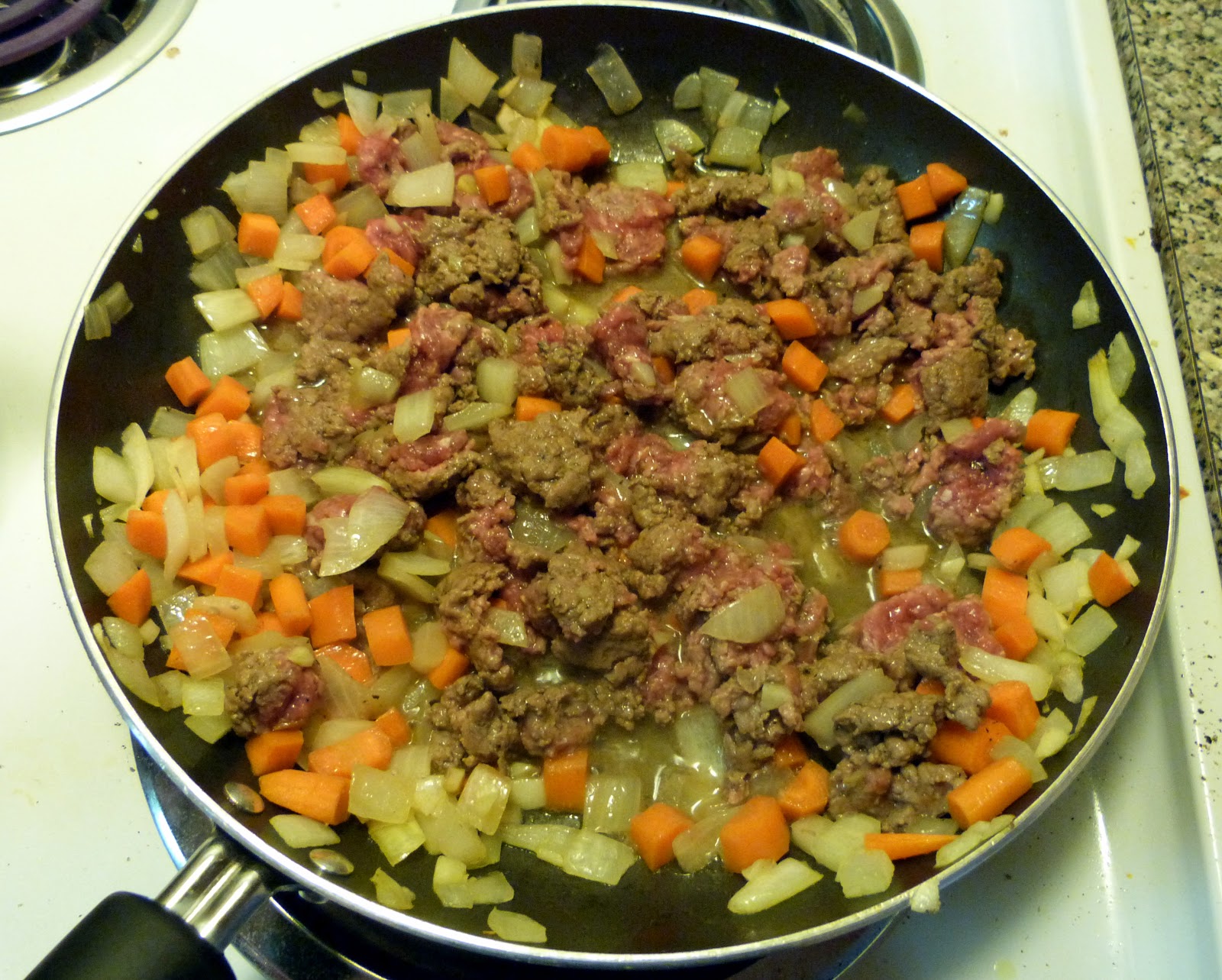
While potatoes are cooking, prepare the filling. Finely dice the onion and carrots. Mince garlic. With a little olive oil, saute vegetables on medium high heat for a few minutes. Add lamb. Break up the meat and add salt, pepper, and Worcestershire sauce. Cook until browned. Add peas, tomatoes, and stock. Mix thoroughly and let cook for a few minutes.


Pour the filling out into a casserole dish. Cover evenly with mashed potatoes. Use a fork to disrupt the top of the potatoes, so small peaks form. These peaks will brown in the oven. Bake for 20 minutes.


When serving, scoop all the way down to get everything. I enjoyed my Shepherd's Pie with a big glass of Murphy's stout.

Friday, May 25, 2012

Tortilla de Patatas

Quite distinct from the Mexican version, Spanish tortilla has been a favorite of mine for a long time. It takes some dedication and time to prepare properly, but is well worth the effort. The dish is a simple but elegant use of potatoes. With relatively few ingredients, each gets to shine. Tortilla is characterized by the layers of fried potato slices, and with enough potatoes on hand, can get very tall. You can see the layers in the photo below, though mine only had two layers.


Ingredients
  • 5-6 potatoes
  • 1/2 onion
  • 6 eggs
  • Salt, pepper, and oregano to taste
  • Olive oil

Instructions

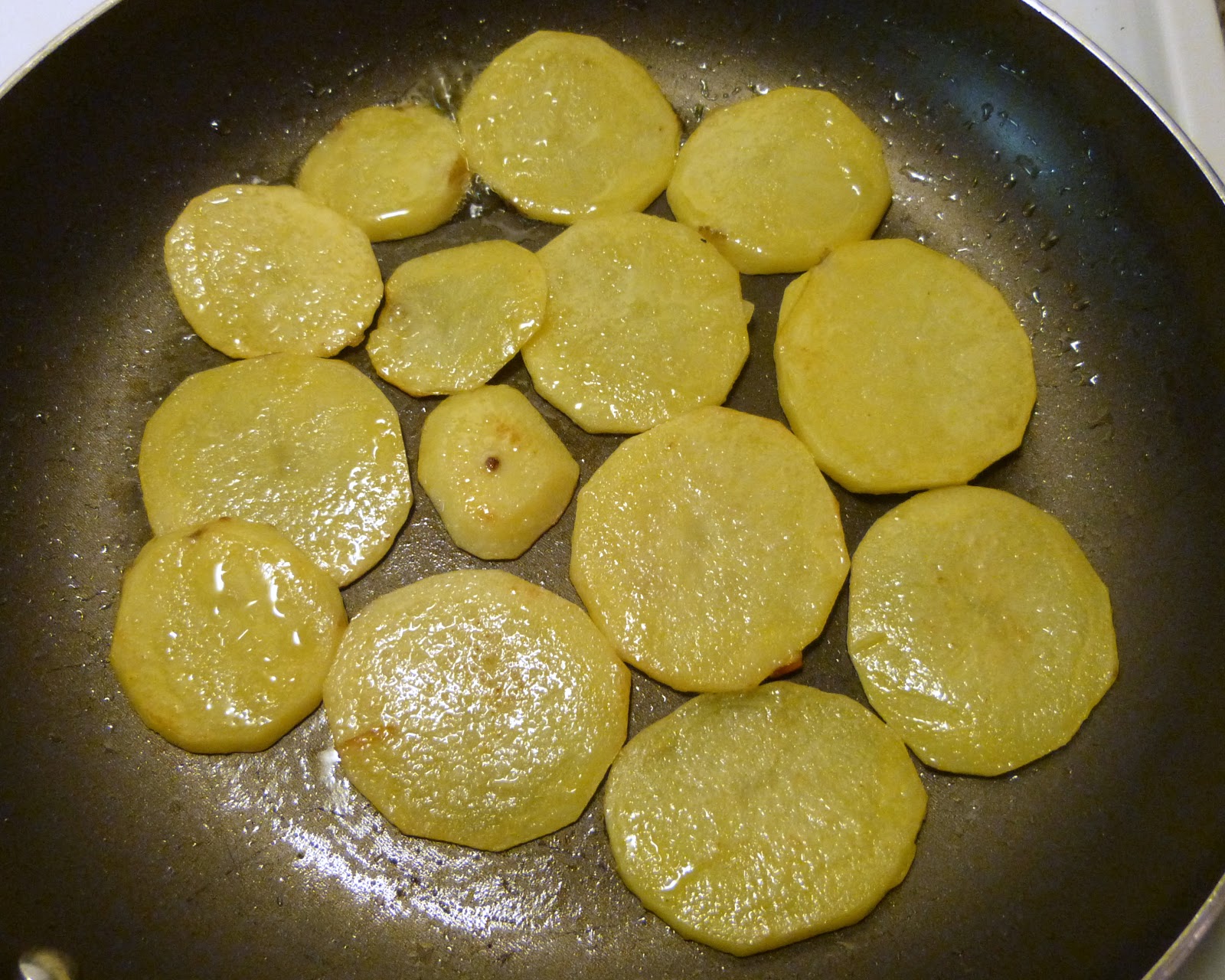
Dice onion. Heat some olive oil in a nonstick pan. Saute onions until soft and translucent. Set aside. While onions are cooking, peel the potatoes and cut into thin slices. Working in batches, fry the potato slices. Try not to let the potato pieces overlap in the pan. Cook on both sides until they are soft enough to poke a fork through easily, and the edges are a little browned. Add a little more olive oil for each batch. Set aside and dry with a paper towel. 


Once all potatoes are cooked, transfer the onions back to the pan. Spread out evenly. Cover with a layer of potatoes, overlapping slightly. Add a little salt. Continue adding layers of potatoes until you run out. The thickness of the tortilla will depend on the area of your pan. Some tortillas can be very thick, though mine was not.


Beat the eggs and season with salt, pepper, and oregano (if desired). Pour the eggs over the potatoes and shake the pan a bit to ensure the eggs permeate. 

Perfectly golden brown.

Cook on the stove top for a few minutes, until the eggs have visibly set on the bottom. Transfer to broiler and cook until eggs are firm, and the tortilla is nicely browned. Slice and serve. Complete your Iberian feast with a cold glass of Sangria.

Wednesday, May 23, 2012

Scalloped Potatoes

My apologies, my dear readers, I haven't been feeling too inspired to do a lot of great cooking recently. You won't be disappointed by this one, though. Scalloped potatoes are another family favorite, and I've eaten them going way back. I consulted a bit with mom, though I was winging it quite a bit here. While my first attempt was not 100% successful, I present here the "lessons learned" version. You can use whatever kind of potatoes you like. I used the ever-versatile Yukon Golds. I also want to make a note about turkey ham. When I was younger, we always had a block of this stuff on hand, and we used to put it on everything - sandwiches, Ramen, mac and cheese, even quesadillas. It's a little lighter in flavor than regular ham, and very inexpensive. Still today, it often catches my eye in the grocery store.


Ingredients
  • 4 good-sized potatoes
  • 1 cup diced ham or turkey ham
  • 2 tbs butter
  • 1 1/2 cups skim milk
  • 1/2 cup half and half
  • 2-3 tbs flour
  • Diced onion (optional)
  • Grated Emmentaler or other hard cheese
  • Salt and pepper to taste

Instructions

Preheat the oven to 350 degrees. Peel potatoes and cut into thin slices. Dice ham and onion (if using) into small cubes. Add just a little milk to a bowl, and stir the flour in to form a slurry. Mix the milk and half and half together, then add the thickening slurry.


Cover the bottom of a casserole dish with potato slices, overlapping them slightly. Use about one third of the potatoes. Sprinkle about half the ham and onions over the potatoes. Cut the butter into thin slices (it's easier if the butter is cold), and strategically place about half of it. Sprinkle salt and pepper. Pour some of the thickened milk mixture into the dish.


Cover everything with another layer of potato. Add the remaining ham, onions, and butter. Season this layer, and pour in more of the milk mixture. Cover with all remaining potatoes, season, and pour the rest of the milk in. Cover the top with grated Emmentaler (or a cheese of your choice). Bake until potatoes are soft, about 60 minutes.

Tuesday, March 6, 2012

Galinha à Portuguesa

This is fusion cuisine at it's oldest and best. For over 400 years, Macau was an outpost of the once far-flung Portuguese empire. Like Hong Kong, the food and culture is a mix of east and west. When I was in Shanghai, I occasionally encountered Macanese restaurants and a dish usually called "Portuguese Chicken." It is essentially chicken and potatoes in a mild, yellow coconut sauce. The yellow coloration comes from a generous helping of turmeric. Information about this dish on the internet turned out to be pretty scant. I don't claim my version is authentic, but it's close, and very tasty. You can definitely play around with the levels of the spices. The ginger and coriander amounts here are higher than what I conservatively used, and in hindsight, they needed to come out more.


Ingredients
  • 5 pieces dark meat chicken
  • 1/2 tsp paprika
  • 1/2 tsp salt
  • 1/2 tsp black pepper
  • 4 potatoes
  • 1 1/2 small onion
  • Vegetable oil
Sauce
  • 1 can coconut milk
  • 1/2 cup chicken stock
  • 1 cup diced tomatoes with a bit of juice
  • 2 tsp ground turmeric
  • 1/2 tsp ground coriander
  • 1/2 tsp ground ginger
  • 3 small cloves garlic, minced
  • Salt and pepper

Instructions

Set the oven to 375 degrees. Heat wok on high. Season chicken with salt, pepper, and paprika. You can use the gallon bag method here to speed things up. Wash the potatoes and cut into small pieces. Cut into more pieces if the potatoes are big, to make sure they cook through. Slice the onion into strips.


Heat oil in the wok, and fry the chicken until the outsides are browned. This is exactly the same method as in the Arroz con Pollo from last week. They won't be cooked through at this stage. Do the same for the potatoes, and set these aside. Lastly, brown the onions. 


To assemble the sauce, combine coconut milk, stock, tomatoes, turmeric, coriander, ginger, garlic, salt, and pepper in a casserole dish. Whisk together and add the chicken, potatoes, and onions. Bake until chicken and potatoes are cooked through, at least 35-40 minutes. Serve with rice. The rice tastes great once the sauce runs all over it. You can round off your Portuguese-inspired evening with a glass of port after dinner. Come to think of it, most evenings can be improved that way.

Monday, February 27, 2012

Finals Stew

Finals at Krannert have arrived, and with it, I wanted to create a dish that wasn't too difficult to make, and that I could keep eating for a few days. What I came up with was this once-around-the-kitchen pork and vegetable stew with infused with Asian-inspired flavors. The dairy-based broth gives it a nice creaminess. I've also used turmeric, which is used in Asian cuisines to impart a bright yellow color to food.


Ingredients
  • 2 slices pork loin
  • 5 small red potatoes
  • 4 carrots
  • 2 small onions
  • Handful of sliced mushrooms
  • 1 cup Frozen peas
  • 2 1/2 cups skim milk
  • 1/2 cup half and half
  • 2 cups water
  • 1 tsp paprika
  • 1 tsp coriander
  • 1/2 tsp cardamom
  • 1 tsp turmeric
  • 1 tsp cumin
  • 1/2 tsp garlic powder
  • 1/4 tsp cayenne pepper (optional)
  • Half lemon
  • Salt and pepper
  • Vegetable oil

Instructions

Get the broth going. Combine water, milk, and half and half in a large pot and bring to a boil. Add the spices and however much salt and pepper you want. Cut the potatoes into small pieces (2-8 pieces depending on size). Peel and chop carrots into pieces. Once boiling, bring down to a simmer and add potatoes and carrots.


Heat vegetable oil on high in a frying pan. Cut the pork into slices and quickly brown both sides. Add to the broth. Slice onions into strips and saute until soft and browned. Add to the stew. Do the same for the mushrooms. 


Cover and simmer the whole thing for 30 minutes. Squeeze the lemon juice in, then add peas. Cook for 15 more minutes. At this point, the pork will be very tender. Serve over rice.

Sunday, February 19, 2012

Roasting Sausages and the "One Pan Meal"

Today, No Free Lunch reached 1500 pageviews. Thank you to all my dedicated readers. Make sure to tell all your friends about No Free Lunch and all the great things you've learned how to cook. I've been having a great time with this blog so far. If you have any suggestions or challenges (I do love a challenge) for me, please post them in the comments!


Today, I don't have a new full recipe, just some ideas. Previously, I seared and poached sausages. Another great method is to roast them. Roasting is perfect if you really want to keep the moisture inside the sausage. This leads us to a lot of great, easy "one pan meal" ideas. I like this approach to dinner because you can get everything in the oven and then do something else while it cooks. If the different items take different amounts of time to cook, either put them in partway through, or take them out.

In addition to sausages, chicken legs and potato wedges (now updated with a new photo) work very well as part of your one pan meal. While the pan is in the oven, you also have plenty of time to prepare a salad or other side, as well.

Tuesday, February 14, 2012

Mashed Red Potatoes

Mashed potatoes were another integral part of my diet growing up. Due to Mom's love of the dish, we ate it a lot. Good mashed potatoes are easy to make, and don't require too much effort. That's why I have trouble understanding why people would make instant mashed potatoes from dry flakes. I posted a mashed potato recipe earlier, as part of my Bangers and Mash, but I've refined the recipe and can attest this one tasted great. The key to getting the right texture is the addition of the butter, milk, and cream. I've also used red potatoes here to make use of the skins.


Ingredients
  • 3 red potatoes
  • 2 TBS butter
  • 1 1/2 TBS cream
  • 1 TBS skim milk
  • Salt and pepper to taste

Instructions 

Boil water in a large pot. Cut the potatoes into halves or quarters. With red potatoes, you get a nice texture and color if you leave the skins on, but you can peel them if you want. Boil potatoes for about 20 minutes, or until they become soft enough to poke with a fork. Once cooked, drain the potatoes and transfer to a large bowl.


Add butter, cream, and milk. Smash together with a potato masher. Make sure the butter gets fully melted and folded into the potatoes. The heat from the potatoes should do this naturally. Mash to your desired consistency. I usually don't like them super smooth when using red potatoes.

Mashed potatoes are an incredibly versatile staple food. They go very well with steak, pork, stews, chicken, and more. At Piper's Pub in Pittsburgh, mashed reds are served with Chicken Vindaloo. Another good combination is with creamed peas. The possibilities are endless.

I ate these mashed potatoes as an accompaniment to IKEA's Swedish meatballs and lingonberries with a glass of Woodchuck Amber cider. If you've never tried them, the IKEA frozen meatballs are really quite good, and you can buy the whole meal right there in the store - meatballs, sauce mix, lingonberries, and even frozen mashed potatoes. Here, however, the potatoes are made fresh.

Saturday, January 21, 2012

Bangers and Mash

Pub Week, Day 7! Pub week rolls to a close with perhaps the most quintessential pub grub of them all: Bangers and Mash. Most of the time, I tell people that most complicated-seeming dishes are actually pretty easy to make. This one, however, is the opposite. Bangers and Mash seems very simple, but it actually takes a fair amount of dedication to produce, since it has 3 separate elements that need to come together at once.


Ingredients

Mashed Potatoes
  • 2 gold potatoes
  • 1 1/2 tablespoons half and half
  • 1 tablespoon butter
  • Salt and pepper to taste
Sausage and Gravy
  • 2 links pork sausage
  • 1/2 onion
  • 1 1/2 tablespoons butter
  • 1 tablespoon flour
  • 1/2 cup beef stock
  • Worcestershire sauce
  • Salt and pepper to taste

Instructions

Mashed Potatoes

Boil water in a pot. Peel the potatoes and cut into halves. Boil the potatoes until soft (pokeable with a fork), 20-30 minutes. Once soft, drain the potatoes and mash with a potato masher. Add butter and half and half, and mix thoroughly. Season to taste.


Sausage and Gravy

Heat sauté pan to medium-high and brown sausages on both sides. Fill the pan up with water, about 1/3 up the sides of the sausages. Cover the pan and poach for 20 minutes. While the sausages cook, dice the onion.


Drain the water and set the sausages aside. Melt the butter in the pan and sauté onion pieces until soft, about 5 minutes. Add flour and stir together to integrate. Pour in the beef stock and a splash of Worcestershire. Mix together and reduce for a few minutes to thicken the sauce, and season to taste.


Once all three components are ready, place a mound of potatoes on the plate, top with sausages, and pour the gravy over the plate. Serve with a strong English pale ale for a full alehouse meal. I went with Samuel Smith's Old Brewery Pale Ale.

Friday, January 20, 2012

Roasted Potato Wedges

Pub Week, Day 6. With the whirlwind of blogging going on this week, I've decided to present my roasted potato wedges early. These have been a staple of my diet going back to undergrad. Easy, tasty, and they make the kitchen smell great. The first time I made roasted potatoes, it was in a toaster oven - you can really improvise when the conditions are right (or is it wrong?). These potatoes are a great accompaniment to any meal, be it steak, burgers, fish, or chicken. You can even make a delicious one-pan meal by roasting chicken  legs or sausages on the sheet pan with the potatoes.


Ingredients
  • 4 red or gold potatoes
  • 1/4 cup olive oil
  • 1/2 teaspoon salt
  • 1/4-1/2 teaspoon garlic powder
  • 1/4-1/2 teaspoon onion powder
  • Dried basil
  • Dried oregano
  • Black pepper

Instructions

Preheat oven to 400 degrees. Wash each potato and cut in half. From each half, cut into 3-4 wedges depending on size of potato. Leave the skins on. Place wedges in a gallon-size plastic bag. Pour olive oil into the bag, then add the seasonings right onto the potato. Amounts of each is at your discretion, but 1/4 to 1/2 teaspoon is about right for any of them. Use enough of the dried herbs so that you can see plenty of them on the wedges. You may also choose to add paprika or cayenne pepper to taste. Seal the bag and mix the ingredients around liberally to coat the potatoes evenly. Another great variation to try is to grate Parmigiano-Reggiano into the bag.


Lay out the wedges on a non-stick sheet pan. Bake for 15 minutes, then take the pan out and turn each wedge over to brown the outside evenly. Bake for about 10 more minutes. The potatoes will be soft on the inside and crispy on the outside. Let cool a bit and serve with sour cream.

Sunday, January 15, 2012

Guinness Stew

To kick off Pub Week, we have a hearty Guinness stew. I did a bit of research beforehand and came up with a sort of amalgam of the recipes floating around on the internet. This one is pretty simple to make. It's also delicious - I just ate it.


Ingredients
  • 2 pounds stew beef
  • 3 potatoes (red or gold)
  • 4 carrots
  • 1 sweet onion
  • 1 can diced tomatoes
  • 1 bottle Guinness (or other stout)
  • 4 cups beef broth
  • 2 tablespoons butter
  • 2 tablespoons flour
  • Olive oil
  • Salt, pepper, and garlic powder
  • Parsley

Instructions

If you don't have beef broth, you can do what I did and heat 4 cups of water in a saucepan and dissolve one bouillon cube in it. Purists may scoff, but I don't care. One cube is enough; we don't want the broth to be too salty.

Have two large bowls ready to set aside ingredients. Season the beef with salt, pepper, and garlic powder. Preheat olive oil in a large pot, high. Brown the meat for a few minutes, one pound at a time. Remove and set aside. When I did this, the beef gave off a lot of liquid. Set this aside with the meat also. 


While the beef is cooking, peel and chop the carrots into disks. Saute the carrots in olive oil for a few minutes, then set aside. While the carrots are cooking, wash and cut up the potatoes into about 10-15 pieces, depending on the size. Add more olive oil and saute these for a few minutes as well. Set aside with the carrots. While potatoes cook, roughly chop the onion into strips. Turn down the heat to medium, add more oil, and brown the onions. 

Once the onions are soft, pour the Guinness and beef broth into the pot. Add beef and tomatoes, along with the juice in the can. Cover and simmer for one hour. Now add the potatoes and carrots back in and cook uncovered for another hour. By now, the meat and vegetables will be very tender.

The star of our show.

If you, like me, desire a thicker broth for your stew, prepare a roux. Melt the butter in a saucepan on medium-low heat. Once the butter is melted, add the flour and stir together. Keep stirring as it cooks to avoid clumping and burning. The roux will bubble and slowly darken. Remove from heat after a few minutes, when the roux attains the color shown below.


Spoon a little of the broth from the stew into the roux and scrape it all into the main pot. Stir to integrate. Now, taste the broth. Season with salt and pepper to taste. Below you'll see what the stew looks like at the end. Serve in bowls and sprinkle parsley over the top of each. I suggest serving with a bread roll to sop up the stew.


Store the remaining stew in the fridge, and you will eat for days!